
X


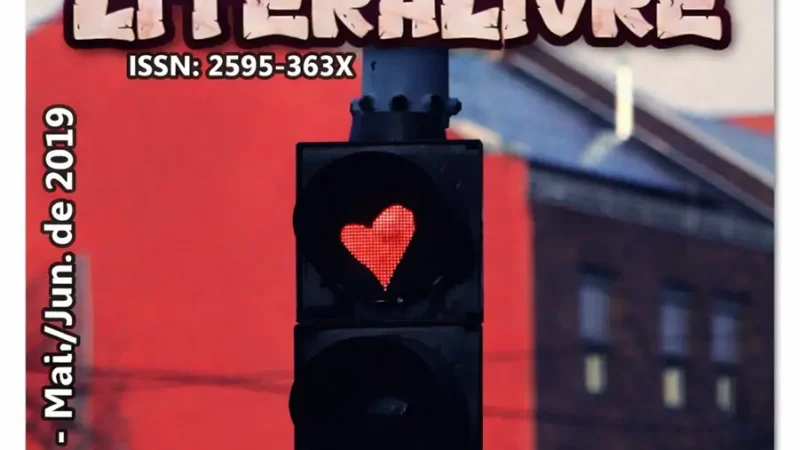
Short Story Published in Literary Magazine “LiteraLivre”
I wrote ‘Espelho Cego’ (‘Blind Mirror’) during the creative process of my debut novel, Prismas. At that stage, I was still exploring some of the themes and tensions that would later become central to the book, particularly those related to the social perception of disabled bodies – specifically, disabled female bodies.
The title of the story is inspired by a sculpture by the Brazilian artist Cildo Meireles, whose piece ‘Espelho Cego’ plays with perception, absence, and the limits of what can be seen. Those ideas resonated strongly with the questions I was exploring at the time — questions about visibility, embodiment, and the uneasy relationship between looking and understanding.
In many ways, the story functions as a kind of prelude to Isabel, the protagonist of Prismas. Readers of the novel may recognise a situation that appears in its very first chapter. Here, however, the scene takes a different direction — perhaps more melancholic. During the writing process, the story became a space where I could explore the emotional terrain of the character before it eventually found a different form in the novel.
Two themes were particularly present in my mind while writing it. One was the persistent stereotype that associates disability with desexualisation. Being either desexualised or seen as a fetish, no middle ground, is something many disabled women can relate to. The second issue was hypervisibility, particularly in blind women’s experiences (you can’t see them, but you know, even without checking visually, everyone notices you with your cane or your dog, even when you just want to be part of the crowd). We have no control over, or any agency inside that economy of gazes, so necessary in amorous encounters. Being constantly seen carries a peculiar weight — the sense of being constantly observed or interpreted by others.
Disabled bodies often occupy a paradoxical position: at once excluded from normative frameworks of desire and, at the same time, subjected to intense scrutiny. ‘Espelho Cego’ emerged from that tension.
The story was later published in Revista LiteraLivre, a Brazilian digital literary magazine dedicated to publishing contemporary writing in Portuguese. Created by the writer Ana Rosenrot, the magazine brings together poetry, short fiction, and other literary texts by emerging and independent authors from different regions of Brazil and other Portuguese-speaking countries.
You can read the full story (in Portuguese) in the issue of LiteraLivre available at the link below.
I wrote ‘Espelho Cego’ (‘Blind Mirror’) during the creative process of my debut novel, Prismas. At that stage, I was still exploring some of the themes and tensions that would later become central to the book, particularly those related to the social perception of disabled bodies – specifically, disabled female bodies.
The title of the story is inspired by a sculpture by the Brazilian artist Cildo Meireles, whose piece ‘Espelho Cego’ plays with perception, absence, and the limits of what can be seen. Those ideas resonated strongly with the questions I was exploring at the time — questions about visibility, embodiment, and the uneasy relationship between looking and understanding.
In many ways, the story functions as a kind of prelude to Isabel, the protagonist of Prismas. Readers of the novel may recognise a situation that appears in its very first chapter. Here, however, the scene takes a different direction — perhaps more melancholic. During the writing process, the story became a space where I could explore the emotional terrain of the character before it eventually found a different form in the novel.
Two themes were particularly present in my mind while writing it. One was the persistent stereotype that associates disability with desexualisation. Being either desexualised or seen as a fetish, no middle ground, is something many disabled women can relate to. The second issue was hypervisibility, particularly in blind women’s experiences (you can’t see them, but you know, even without checking visually, everyone notices you with your cane or your dog, even when you just want to be part of the crowd). We have no control over, or any agency inside that economy of gazes, so necessary in amorous encounters. Being constantly seen carries a peculiar weight — the sense of being constantly observed or interpreted by others.
Disabled bodies often occupy a paradoxical position: at once excluded from normative frameworks of desire and, at the same time, subjected to intense scrutiny. ‘Espelho Cego’ emerged from that tension.
The story was later published in Revista LiteraLivre, a Brazilian digital literary magazine dedicated to publishing contemporary writing in Portuguese. Created by the writer Ana Rosenrot, the magazine brings together poetry, short fiction, and other literary texts by emerging and independent authors from different regions of Brazil and other Portuguese-speaking countries.
