
X


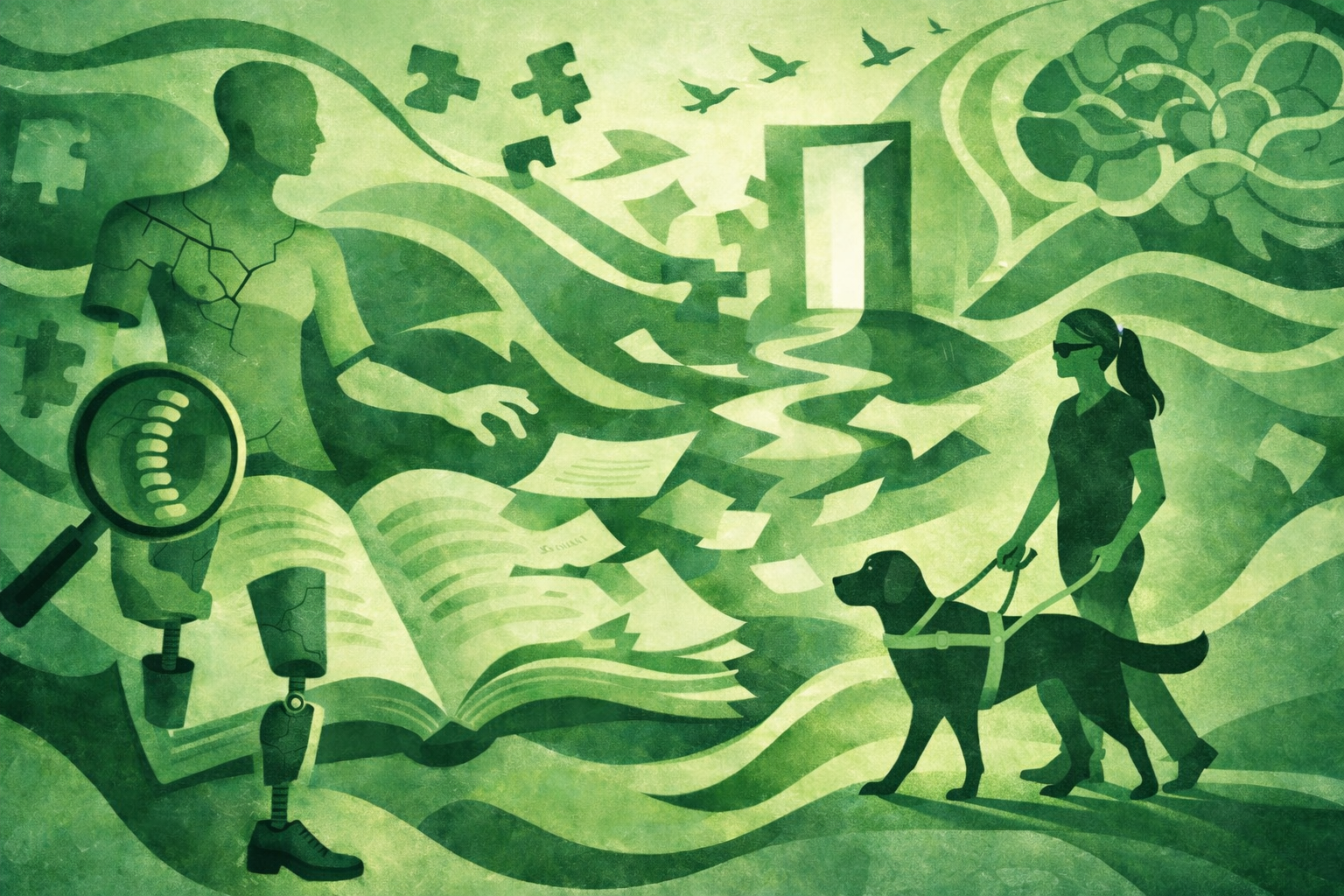
What happens when we write from the body — with all its fragilities, dependencies, and discontinuities?
In To Break the Fifth Wall , the provisional title of my creative-critical PhD thesis, I investigate how disability can transform not only the themes of literature, but also the narrative forms through which they are expressed. The project brings together fiction and theoretical reflection to explore how fragmentation, silence, and uncertainty can function as formal resources capable of giving shape to experiences that challenge normative expectations of autonomy, coherence, and linearity.
‘what happens when we write from the body-mind, with all its fragilities, dependencies, and discontinuities? And what does it mean to allow disability — physical, sensory, neurodivergent, and so on — to shape the text and guide the act of writing?’
My research uses a creative-critical methodology, an approach in which literary creation and theoretical reflection develop in an interdependent way. In this model, the novel is not merely an object of analysis; it also functions as a space of investigation in its own right. Writing becomes a mode of thinking, capable of testing hypotheses, exploring formal limits, and producing knowledge that could not emerge solely through traditional critical discourse.
This is the question that guides my research. I explore how disability can transform not only the stories we tell, but also the forms we choose to tell them.
With firm roots in embodied experience — with its fragilities, dependencies, and discontinuities — I explore how the body can become a point of departure for literary form.
Fragmentation, incompleteness, and non-linearity do not appear as narrative flaws, but as aesthetic paths that make it possible to express other ways of being in the world.
The project develops along two complementary strands: an experimental novel (also provisionally titled “To Break the Fifth Wall”) and a critical essay.
Three voices share the space of the page in the novel — not always in harmony, but always in productive tension. The material form of the text seeks to reflect the asymmetries of perception, language, and experience that shape the relationship between the two protagonists.
A Brazilian actress living in England returns to Brazil and writes in fragments. Newly deaf and facing writer’s block, Eliza reflects on language, memory, and identity in an intimate and disconcerting narrative.
Viv is a woman with physical disabilities who was assisted by Eliza during the Covid-19 pandemic. The two eventually become lovers. With the awkwardness and limitations of automatic transcription, Viv replies to Eliza in a side column — a cramped and marginal space, not by coincidence.
Fragments of Eliza’s ancestry, narrated in reverse chronological order. These excerpts function as “narrative prostheses”: fictional ways of recovering what was lost, denied, or never known.
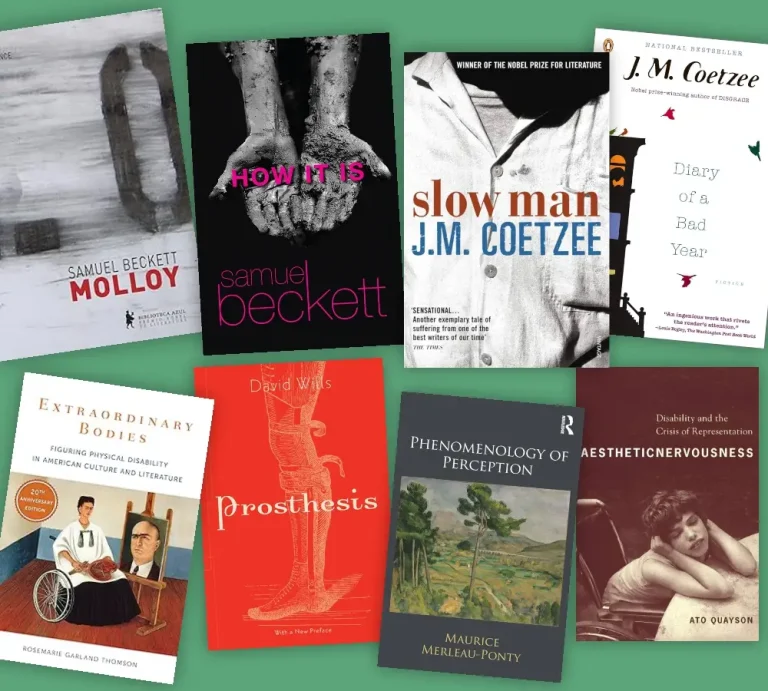
The critical essay that accompanies the novel investigates how disability can operate as a formal principle in literature. To do so, I analyse works by two authors I have long admired, even before studying them formally: Samuel Beckett and J. M. Coetzee. I examine the ways in which their ‘novels’ destabilise narrative conventions, expose the fragility of the novel as a genre — and of the act of writing itself — and make use of prostheses (in both literal and figurative senses) to sustain their structure.
If you identify with my work and are interested in inviting me to collaborate on future projects — such as consulting, workshops, events, or creative partnerships — I'd love to hear more.

Although still in development, “To Break the Fifth Wall” has already been presented at academic conferences, writing workshops, and discussion groups. Excerpts from the novel have been read publicly, and parts of the theoretical essay have contributed to debates and teaching activities in different contexts.
In 2025, the project travelled with me to Harvard, where I led and presented in a colloquium group at the Institute for World Literature. In 2026, I will present the work at the Leeds International Disability Studies Conference, a gathering that brings together researchers from around the world dedicated to the study of disability as a social and aesthetic issue.